
When beginners start learning SEO, one of the first concepts they encounter is keywords. If you have searched for search engine optimization key words, you are really trying to understand how search terms help pages appear in Google and other search engines.
In simple terms, SEO keywords are the words and phrases people type into search engines when they want information, products, services, or answers. When your content is built around the right keywords and matches what the searcher actually wants, search engines are more likely to understand your page and show it in relevant results.
That does not mean you should repeat the same phrase again and again. Modern SEO works best when content is clear, useful, and aligned with search intent. The goal is not keyword repetition. The goal is relevance.
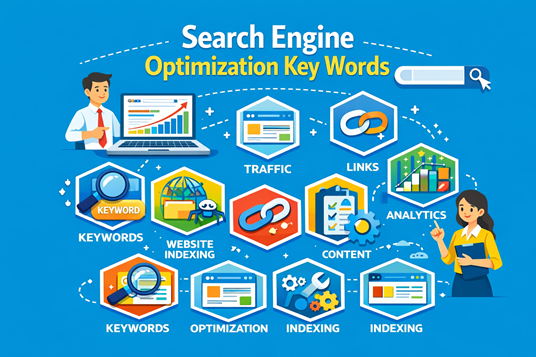
Search Engine Optimization Key Words Explained Quickly
A simple definition comes first: search engine optimization key words are the search terms that connect your content to your audience.
What SEO keywords are in plain English
SEO keywords are the phrases people use when looking for something online. If someone searches for “best budget laptop for college,” that phrase is a keyword. If your article or product page answers that need clearly, your page may be considered relevant for that search.
Some keywords are broad, like “laptop.” Others are highly specific, like “best budget laptop for engineering students.” The more specific the phrase, the easier it usually is to understand what the user wants.
That is why keywords are helpful in content planning. They show you not only what topic to cover, but also how real people talk about that topic when they search.
Why they matter for rankings and visibility
Keywords matter because they help search engines interpret your page. They appear in places such as the title, headings, introduction, body copy, and links, all of which help define the page topic.
A strong keyword strategy can help you:
attract relevant visitors instead of random traffic
organize pages around topics people already search for
improve the clarity of your content
build pages that are easier to rank for when the topic is specific
Without a keyword strategy, content often becomes too broad. A page may be well written, but it can still miss traffic opportunities if it does not reflect how people actually search.
How Search Engines Understand Keywords Today
Keywords still matter, but search engines now understand far more than exact phrase matching. They try to understand meaning, context, and user intent.
Keywords, topics, and search intent
Search intent is the reason behind a search. A person searching “how to clean running shoes” wants instructions. A person searching “buy running shoes online” is closer to making a purchase.
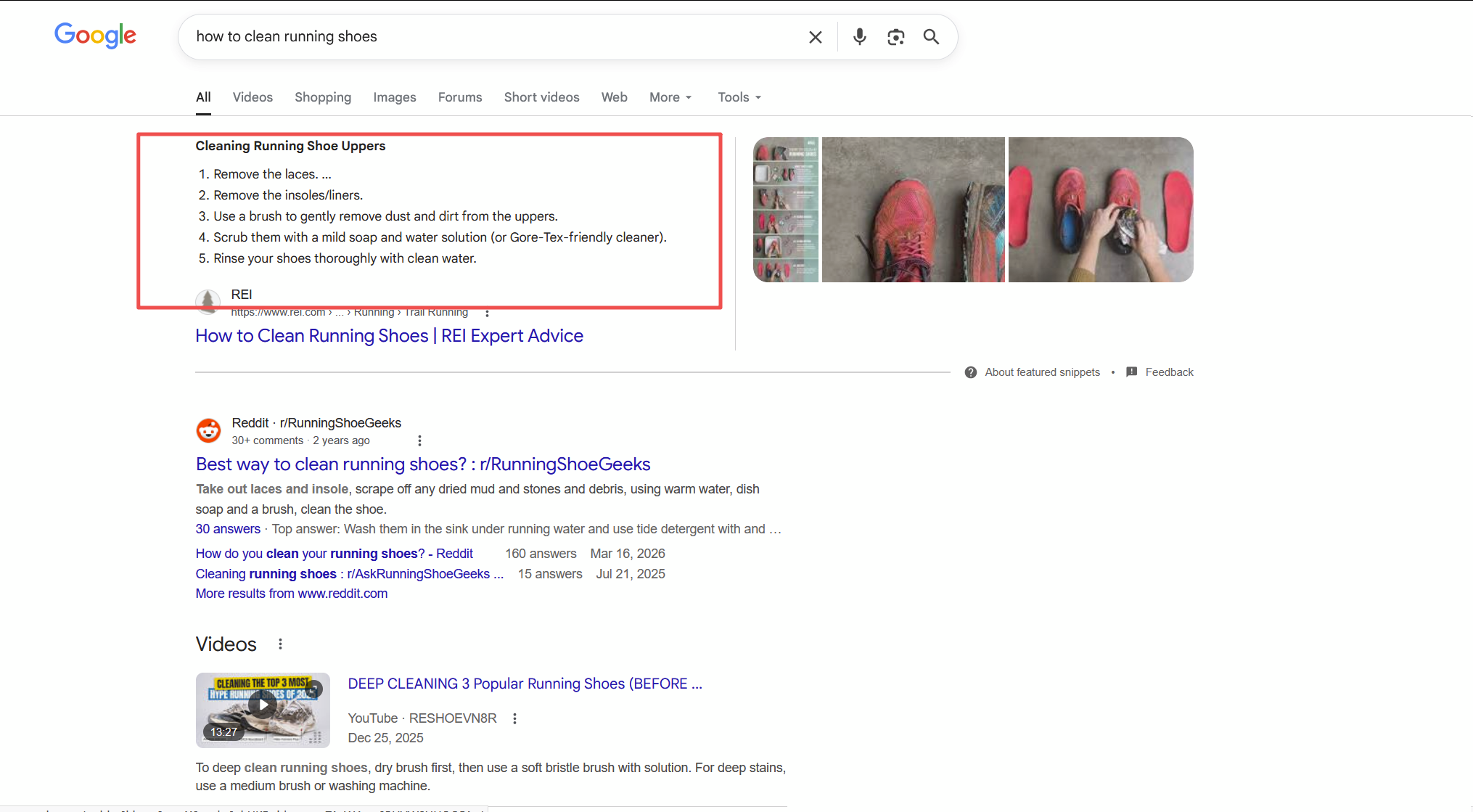
Even though both searches use similar language, the desired result is different. That is why intent matters so much in keyword research. The best page for a keyword is the one that matches the searcher’s goal.
When choosing target keywords, always ask what the user wants:
a definition
a tutorial
a product comparison
a service page
a direct purchase option
This helps you choose the right keyword and the right content format.
Why natural language works better than repetition
Older SEO advice often encouraged exact-match repetition. That is no longer a good strategy. Search engines can understand related phrases and broader topical meaning.
A page about SEO keywords can naturally include terms like:
keyword research
target keywords
long-tail keywords
search intent
on-page SEO keywords
keyword strategy
This creates a fuller topic signal while keeping the writing readable. Natural language is not just better for users. It also reflects how modern search engines interpret content.
The Main Types of SEO Keywords
Understanding keyword types helps you target the right searches and create the right pages.
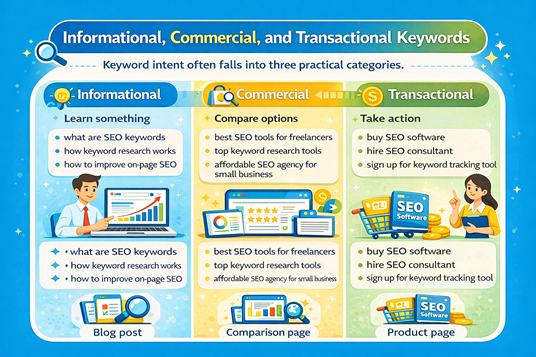
Short-tail vs. long-tail keywords
Short-tail keywords are broad terms such as:
SEO
laptops
skincare
They often have high search volume, but they are also highly competitive and less specific. A search like “SEO” could mean the user wants a definition, a course, a tool, or an agency.
Long-tail keywords are more detailed phrases such as:
search engine optimization key words for beginners
best laptop for remote work and video calls
skincare routine for dry sensitive skin
These phrases usually have lower search volume, but they often bring better-fit traffic because intent is clearer. For newer sites, long-tail keywords are usually more realistic and more useful.
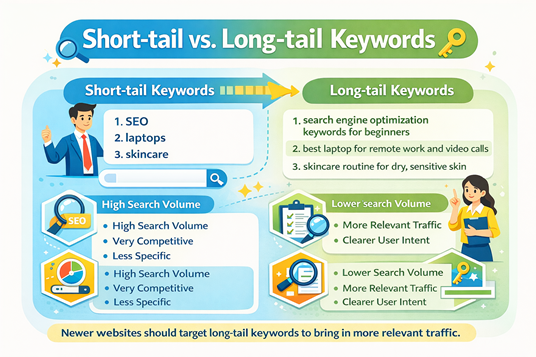
Informational, commercial, and transactional keywords
Keyword intent often falls into three practical categories.
Informational keywords are used when people want to learn something.
Examples:
what are SEO keywords
how keyword research works
how to improve on-page SEO
Commercial keywords are used when people are comparing options.
Examples:
best SEO tools for freelancers
top keyword research tools
affordable SEO agency for small business
Transactional keywords suggest stronger buying intent.
Examples:
buy SEO software
hire SEO consultant
sign up for keyword tracking tool
Each keyword type works best with a different page style. Informational terms often fit blog posts. Commercial terms often fit comparison content. Transactional terms usually work better for landing pages or product pages.
Primary keywords and related keywords
A well-optimized page usually targets one primary keyword and several related keywords.
The primary keyword is the main focus of the page. Related keywords support that topic and help build topical depth.
For example, this article centers on search engine optimization key words, but it also naturally uses related phrases such as:
SEO keywords
keyword research
long-tail keywords
search intent
keyword difficulty
keyword strategy
This makes the article more complete without making it repetitive.
How to Find Search Engine Optimization Key Words
The best keyword ideas usually come from your audience first and your tools second.
Start with customer questions and topics
Start by asking what your audience wants to know, solve, compare, or buy. This keeps keyword research grounded in real needs.
Useful starting points include:
common customer questions
product or service categories
frequent objections
beginner questions
comparison topics
local service queries
For example, a local service business might identify searches like:
emergency plumber near me
how much does drain cleaning cost
best plumber for old homes
A blog or niche site might focus on educational terms instead. The key is to begin with actual audience demand, not random phrases.
Use keyword research tools and Google suggestions
Once you have starting topics, use tools to expand them. Good sources include:
Google autocomplete
People Also Ask
related searches
Google Search Console
keyword tools such as Ahrefs, Semrush, Moz, or Ubersuggest
These tools can help you find:
keyword variations
estimated search volume
keyword difficulty
common questions
related subtopics
Search volume tells you how often people search for a phrase. Keyword difficulty estimates how competitive it may be. Both are useful, but relevance should still come first.
Check what is already ranking
Search your target keyword and study the top results. This tells you what Google currently sees as the best match for that query.
Look at:
page type
search intent
content depth
recurring subtopics
the level of expertise expected
If most top-ranking results are beginner guides, an advanced technical page may not fit the query well. If most results are service pages, a blog post may struggle. This kind of review helps you shape the right content before you start writing.
How to Choose the Best Keywords for Your Content
Finding keywords is only the first step. Good SEO comes from choosing the right ones.
Relevance comes first
A keyword should match your business, your audience, and the goal of the page. High traffic does not matter if the visitors are a poor fit.
A local roofing contractor gains little from ranking for a broad term like “roof design ideas” if the goal is to get leads. A more targeted phrase such as “roof repair company in Denver” may bring fewer visits, but those visits are much more valuable.
Relevance is what turns traffic into useful traffic.
Search volume, difficulty, and competition
After relevance, compare opportunity and ranking difficulty.
Search volume shows traffic potential.
Keyword difficulty suggests how competitive the term may be.
Search results show who you are competing with.
If the first page is dominated by major brands, government sites, or long-established publishers, ranking may be difficult. A more specific keyword with moderate demand can often be a smarter target, especially for smaller sites.
This is why keyword strategy is about choosing achievable opportunities, not just the biggest numbers.
Why long-tail keywords are often better for beginners
Long-tail keywords are often ideal for beginners because they are:
more specific
easier to match with useful content
usually less competitive
more likely to convert
Instead of targeting “SEO,” a beginner might target “how to find SEO keywords for a new website.” That phrase is clearer, easier to address, and more aligned with a specific need.
Long-tail keywords also make content planning easier because they naturally suggest what the article should cover.
Where to Place SEO Keywords on a Page
Keyword placement still matters, but it should always feel natural.
Title, H1, and meta description
Your title should clearly describe the page and include the primary keyword in a natural way. The H1 should support the same topic, even if the wording is slightly different.
Your meta description should summarize the page clearly and encourage clicks. It does not directly determine rankings, but it can improve click-through rate when it matches user intent well.
Together, these elements set expectations before the visitor even opens the page.
Subheadings, opening paragraph, and body content
Include your main keyword early in the introduction so users and search engines quickly understand the topic.
Use subheadings to organize the content with related phrases and supporting terms. This improves structure and helps cover the topic more completely.
In the body, keywords should appear where they genuinely help explain the subject. Do not force a phrase into every paragraph. Good optimization supports readability rather than interrupting it.
URLs, image alt text, and internal links
A short descriptive URL reinforces topical clarity. Image alt text should describe the image itself, not act as extra keyword storage.
Internal links also support SEO by connecting related pages. When you use natural anchor text, you help users discover more content and give search engines better context about your site structure.
SEO Keyword Mistakes That Hurt Performance
Some keyword mistakes can weaken content even when the topic is strong.
Keyword stuffing
Keyword stuffing means overusing the same phrase in a way that sounds unnatural. This hurts readability and makes the content feel low quality.
Instead of repeating the same keyword, use related language, expand the topic properly, and write for clarity.
Ignoring search intent
A page can use the right words and still fail if it does not match user intent.
If the searcher wants a how-to guide and your page is mostly a sales pitch, performance may suffer. If the searcher wants comparisons and your page only gives definitions, the content may not satisfy the query.
Matching the intent behind the keyword is often more important than repeating the keyword itself.
Using the same keyword on every page
When multiple pages target the same phrase too aggressively, they can compete with each other. This weakens site structure and makes it harder for search engines to understand which page should rank.
Give each page a distinct purpose. One can be a guide, another a comparison, and another a service page. This makes the site easier to navigate and stronger overall.
A Simple SEO Keyword Strategy You Can Use Right Away
You do not need an overly complex system to improve keyword targeting.
Choose one primary keyword
Start with one main keyword for each page. This becomes the central focus for the title, H1, intro, and structure.
A single clear focus usually performs better than trying to rank one page for too many unrelated terms.
Add supporting keywords naturally
Once you have the main keyword, add related phrases where they fit. These may include:
close variations
subtopics
common questions
synonyms
supporting terms tied to intent
This creates stronger topical coverage and helps the content feel complete.
Build content that answers real search questions
The best keyword strategy is not just about terms. It is about usefulness.
A strong page should answer the real questions behind the search:
What does this mean?
Why does it matter?
How do I do it?
What mistakes should I avoid?
What should I do next?
When your content answers those questions clearly, keyword usage becomes more natural and more effective.
Conclusion: Use SEO Keywords to Match Content With Intent
Learning how search engine optimization key words work helps you build content that is easier to find and more useful to readers.
The biggest takeaway is simple: keywords are not just words to insert into a page. They are clues about what your audience wants. When you choose relevant keywords, match the right search intent, and use natural language throughout a well-structured page, you create content that works better for both users and search engines.
For most beginners, the smartest path is to focus on one primary keyword, target long-tail opportunities, include related terms naturally, and build content around real search questions. That approach is more practical, more sustainable, and more likely to produce meaningful SEO results over time.
Frequently Asked Questions About SEO Keywords
What are search engine optimization key words?
They are the words and phrases people enter into search engines. In SEO, they help guide content creation so pages can better match relevant searches.
How do SEO keywords help pages rank?
They help search engines understand page relevance. When keywords are used naturally and the content matches search intent, a page is more likely to appear for relevant searches.
What is the best way to find SEO keywords?
Start with audience questions, then expand those ideas using keyword research tools, Google suggestions, and ranking-page analysis.
Are long-tail keywords better for small websites?
Often, yes. Long-tail keywords are more specific, usually less competitive, and more likely to attract visitors with clear intent.
Where should I place keywords in an article?
Use the main keyword naturally in the title, H1, introduction, and conclusion. Place related keywords in subheadings and body content where they fit naturally.
Can I rank without repeating the same keyword many times?
Yes. Modern SEO focuses more on topical relevance, content quality, and intent matching than on exact repetition.
What is the difference between keyword research and search intent?
Keyword research shows what people search for. Search intent explains why they are searching and what kind of content they expect to see.
How many SEO keywords should one page target?
Usually one primary keyword plus several related keywords is the best balance. This keeps the page focused while still covering the topic thoroughly.